 By
By 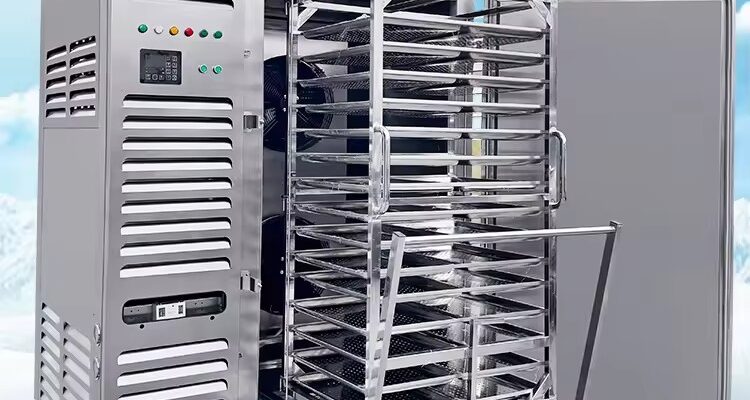
A freezing machine sits at the intersection of food safety, product quality, and factory efficiency. Many teams start the buying process with one question: “How many kilos per hour can it freeze?” That’s important, but it’s not enough. The real question is how the freezing machine performs with your exact product under real conditions, day after day, with minimal downtime and predictable energy use.
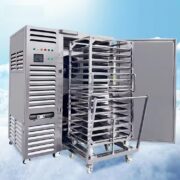
In practice, a freezing machine is a complete system. It includes airflow design, insulation, heat exchange, belt or conveyor handling, and controls that define how stable your process is. If your product is delicate, sticky, or tends to clump, a freezing machine that looks perfect on paper can become a headache on the floor. And if your product mix changes seasonally, flexibility becomes just as valuable as raw capacity.
Start with your product behavior
A good selection process begins with understanding how your product behaves when exposed to cold air. Is it high in water content like fruit? Does it have oil or fat like poultry or fried items? Does it arrive hot from a cooking step? Each variable changes how quickly heat is removed and how much moisture is present in the freezer environment. High moisture loads can create frost buildup faster. High fat products may need a different freezing curve to protect texture.
Industrial freezers come in different formats, and the right freezing machine depends on whether you need individual separation, gentle handling, or maximum efficiency for uniform shapes. For many processors, the decision comes down to how much control you need over final quality versus how simple the process needs to remain.
Matching the freezing machine to line layout
Factory space is rarely unlimited. Some industrial freezers require long footprints. Others build capacity vertically. Your upstream system might deliver product on trays, in bins, or on a conveyor. The freezing machine needs to connect cleanly, without creating bottlenecks. If your packaging area is tight, the discharge height and flow matter. If you run multiple shifts, cleaning access and maintenance zones matter even more.
A common reason projects go over budget is that equipment fits in CAD but doesn’t fit in real operations. The best suppliers help you map the full product journey, not only the freezer itself. That includes staging areas, sanitation routes, and safe operator access.
Controlling quality through freezing profiles
Quality is not only about “cold enough.” It is about how the product reaches that state. A freezing machine with strong controls can maintain consistent airflow and temperature even when input conditions fluctuate. That means fewer surprises when the cooking line runs a little hotter, or when product size shifts slightly. Consistency reduces rework and reduces the need to over-freeze “just to be safe,” which often wastes energy.
Maintenance and sanitation should be designed in
Industrial freezers are exposed to frost, moisture, and sometimes product particles. If cleaning takes too long, your effective capacity drops. If maintenance is hard, small issues become big stoppages. A freezing machine should be designed for easy access to belts, fans, drains, and critical wear points. That’s how you keep uptime high and costs controlled.
Why many processors look at proven brands like JBT Foodtech
When companies scale, they often choose known equipment ecosystems for reliability and serviceability. JBT Foodtech is one of the names frequently considered in industrial freezing, particularly in large processing environments where standardized parts, support, and performance history are valued. Whether you choose JBT Foodtech or another solution, the key is to evaluate the freezing machine against your actual product, target quality, and operational constraints.
A practical next step
If you’re searching for a freezing machine, treat it like a production strategy decision, not only an equipment purchase. Industrialfreezing.com helps processors explore industrial freezers and compare system types so you can make a decision based on quality goals, throughput needs, and real-world factory operation.